§ Journal · Jun 2, 2026
Spring Bar Inspection — When to Flip, When to Replace Your Chainsaw Guide Bar
A seasonal guide to inspecting your chainsaw bar for rail wear, groove depth, and nose sprocket condition — and why flipping it regularly doubles its life.
Published · Last updated:
Spring Bar Inspection — When to Flip, When to Replace Your Chainsaw Guide Bar
Spring is the natural checkpoint for chainsaw maintenance. Before the cutting season ramps up, ten minutes inspecting your guide bar can prevent stalled cuts, crooked felling, and premature chain wear. Most homeowners focus on the chain, but the bar wears out too — and a worn bar will destroy a brand-new chain in short order.
Check the bar rails for uneven wear
The two rails on either side of the bar groove are the surfaces your chain rides on. One side wears faster because the bottom of the bar handles most cuts. Uneven rail wear tilts the chain, leading to crooked cuts and one-sided cutter dulling.
To inspect:
- Remove the bar and clean off sawdust and oil buildup.
- Hold the bar at eye level and look down the rails from one end. They should be flat and even.
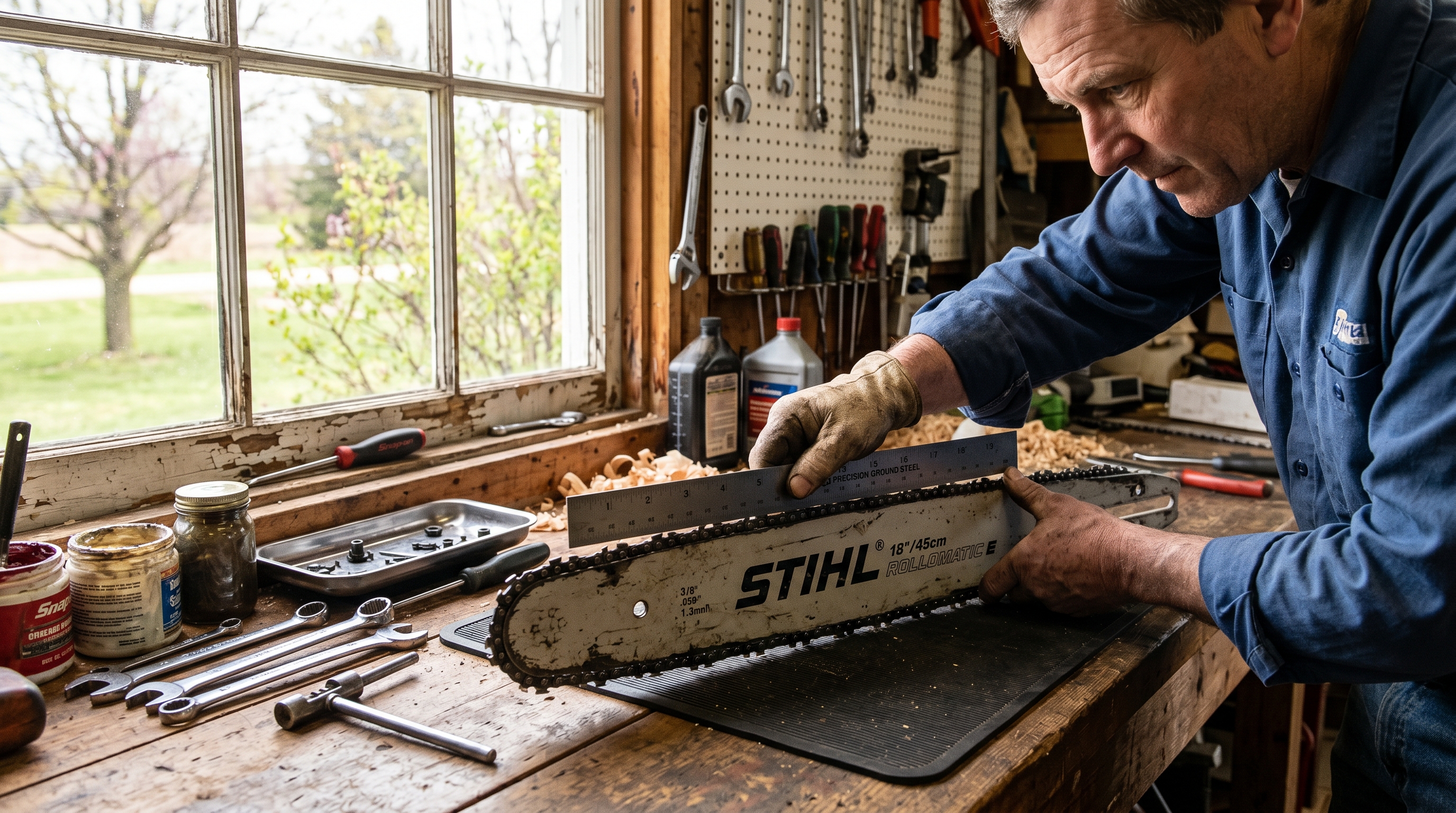
- Place a straightedge across the rails. Any gap means that rail is worn.
- Run your fingernail along each rail edge. Burrs or raised metal mean the rails are spreading.
Minor unevenness can be corrected with a flat mill file. Major wear — one rail visibly shorter than the other — means the bar needs replacement.
Measure the groove depth
The groove between the rails holds the drive links and keeps the chain tracking straight. As rails wear, the groove becomes shallower. Shallow grooves mean drive links ride higher, reducing stability and risking derailment under load.
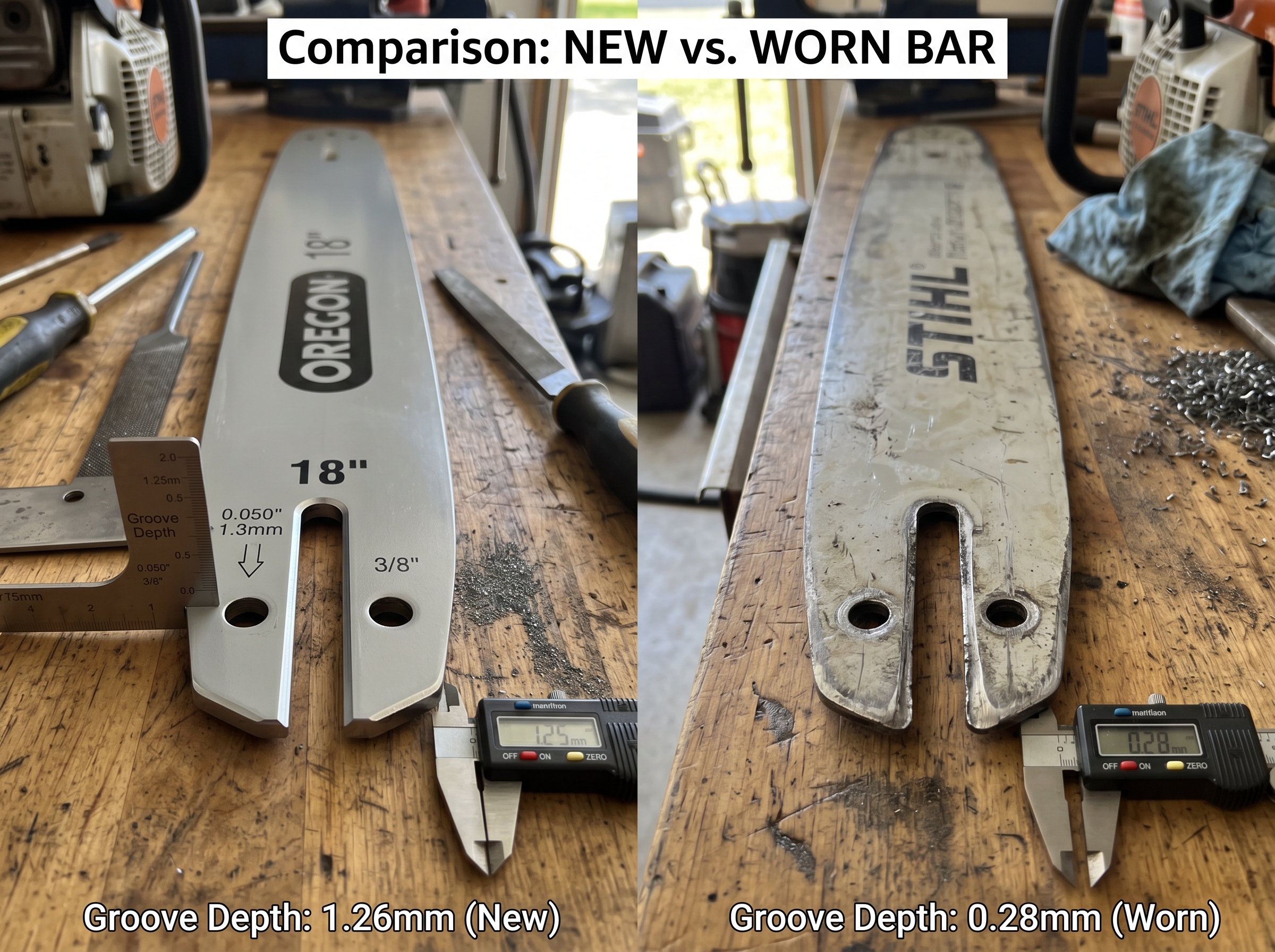
Insert a drive link from your chain into the groove. It should sit below the rail surface. If the drive link top is flush with or above the rails, the bar is worn past safe limits.
Inspect the nose sprocket
Bars with a sprocket nose need the sprocket checked separately. Spin it by hand — it should rotate smoothly. If it feels gritty, stiff, or has side-to-side play, the bearing is failing.
A seized nose sprocket creates friction that heats the chain at the tip, produces smoke, and starves the nose of oil even when the system is working. On most consumer bars, the nose sprocket is not replaceable. Once it fails, the bar is done.
Flip the bar to even out wear
This is the single most effective step most chainsaw owners never do. Because the bottom rail handles most cutting load, it wears faster. Removing the bar, turning it over, and reinstalling it distributes wear evenly across both rails.
How often to flip:
- Homeowner use: Every other chain sharpening, or every 3-4 tanks of fuel.
- Regular use (firewood, property work): Every time you sharpen the chain.
- Heavy professional use: At every refuel.
When you flip, also clean the groove with a groove-cleaning tool or thin screwdriver. Packed sawdust prevents proper oiling and accelerates wear.
Flipping does not fix a bar already worn past correction. It prevents uneven wear from developing in the first place — like rotating tires, it only works if you start before the damage is done.
When to replace the bar and chain together
Some situations call for a full bar-and-chain replacement:
- Rails are worn unevenly and filing does not restore them. A tilted bar always cuts crooked.
- Groove is too shallow for the drive links. The chain can derail under load — a safety issue.
- Nose sprocket is seized or has excessive play.
- The bar is bent or cracked. Even a slight bend causes binding.
- You are switching chain specifications. A different pitch or gauge requires a matching bar.
Replacing bar and chain as a matched set ensures compatibility and even break-in. A new chain on a badly worn bar wears unevenly from the first cut.
For more on bar replacement timing, see our guide on when to replace your chainsaw guide bar. For pairing a new bar with the right chain, how to choose the right chainsaw chain covers pitch, gauge, and drive link matching.
Spring inspection summary
Before your first serious cut of the season:
- Remove the bar. Clean it thoroughly.
- Check rail height and evenness with a straightedge.
- Test groove depth with a drive link.
- Spin the nose sprocket — smooth and free.
- Flip the bar if you have not done so recently.
- Reinstall with a properly tensioned, sharp chain.
Ten minutes of inspection in spring saves you a seized bar, a thrown chain, and the cost of parts that wore out faster than they should have.

Find the right part on Amazon
Check price, stock and fitment — ships direct from Amazon.
§ Parts