§ How-To
When Should You Replace Your Chainsaw Guide Bar?
Learn the signs that your chainsaw guide bar is worn out — from rail wear and bent bars to pinched grooves and failed nose sprockets.
Published · Last updated:
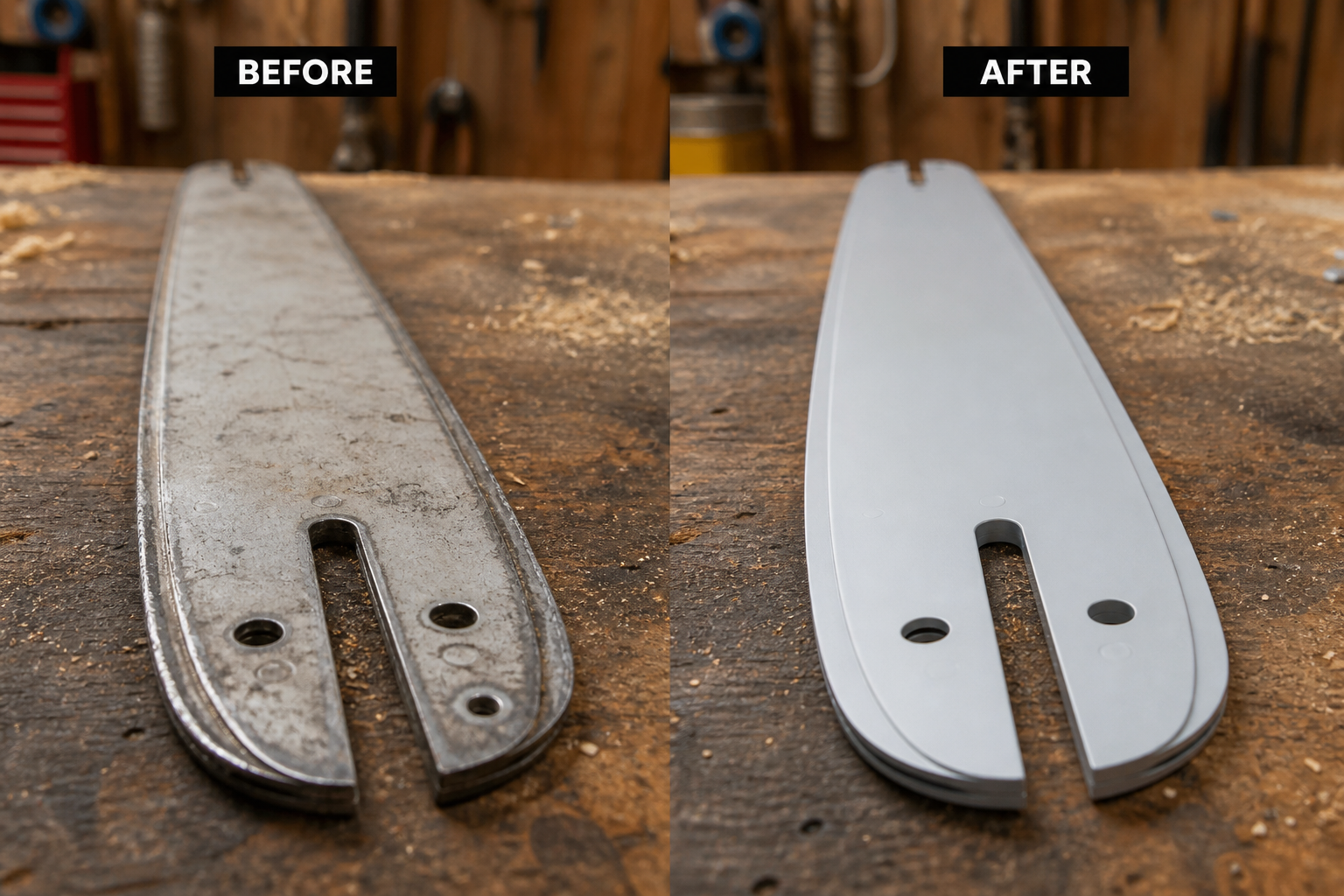
Most chainsaw owners pay close attention to chain sharpness but rarely think about the guide bar until something goes obviously wrong. The bar is the backbone of the cutting assembly — it supports the chain, channels oil, and takes the brunt of every pinch, bind, and drop. A worn bar doesn’t just underperform; it actively damages new chains, wastes oil, and makes the saw harder and less safe to use. Knowing when a bar has reached the end of its service life can save you money on chains and frustration in the field.
Here are the key signs that your guide bar needs replacing, and what to check during routine maintenance.
Worn or Uneven Bar Rails
The two raised edges that run along each side of the bar are called the rails. The chain’s drive links ride in the groove between them, and the tie straps and cutters glide on top of the rails. Over time, the rails wear down from friction, heat, and contact with wood and debris.
Signs of rail wear:
- The chain leans to one side when tensioned. This causes curved or angled cuts instead of straight ones.
- One rail is noticeably lower than the other when you sight down the bar from the tip. You can check this by laying a small straight edge (like a ruler or square) across the rails.
- The chain wobbles side to side on the bar, even when properly tensioned.
- Burrs or rough spots on the rail edges that catch your finger when you run it along the top surface.
Minor rail wear can be corrected with a flat file — a process called “dressing” the bar rails. But once the rails are worn thin, uneven beyond correction, or the groove has widened from repeated dressing, the bar is done.
A useful habit: flip your bar end-for-end each time you change the chain. Most bars are symmetrical and can be mounted either way. Alternating sides promotes even rail wear and extends the bar’s working life.
Bent or Twisted Bar
A bent guide bar is easier to spot than you might think. Remove the chain, hold the bar at the mount end, and sight down the length of it. The bar should be straight and flat. Any visible curve, bow, or twist means the bar is bent.
Common causes of a bent bar:
- The saw was dropped or struck against a hard surface
- The bar was pinched in a closing cut and levered sideways
- Excessive force was applied during a bind
A bent bar causes the chain to track unevenly, increases wear on one side, and makes straight cuts nearly impossible. There’s no reliable way to straighten a bent bar — once it’s warped, it should be replaced. Continuing to use a bent bar accelerates chain wear and increases kickback risk.
Pinched or Narrowed Groove
The groove in the guide bar is machined to a specific width that matches the gauge of the chain’s drive links. Over time, impacts, overheating, and debris can cause the groove to narrow — a condition called “pinching.”
To check for a pinched groove:
- Remove the chain from the bar.
- Slide a new or known-good drive link into the groove at various points along the bar.
- The drive link should slide freely without binding.
- Pay special attention to areas near the nose and any spots where the bar has been struck or squeezed.
If the drive link binds or requires force to slide through, the groove has narrowed. A mildly pinched groove can sometimes be opened with a bar-groove spreading tool, but this is a temporary fix. A bar that repeatedly pinches is too worn or damaged to maintain the correct groove width, and the chain will run hot, wear fast, and risk derailing.
A pinched groove also restricts oil flow through the bar, which makes the lubrication problem even worse.
Nose Sprocket Failure
Many guide bars — especially those 14 inches and longer — feature a roller-tip sprocket at the nose. This sprocket reduces friction as the chain rounds the bar tip, which is where the chain changes direction and generates the most heat.
Signs the nose sprocket is failing:
- The sprocket doesn’t turn when you spin it by hand (with the chain removed). It should rotate freely.
- Grinding or rough feeling when you rotate the sprocket.
- Visible flat spots or missing teeth on the sprocket.
- Excessive heat at the bar tip during cutting, even with good oil flow.
- The chain derails at the tip repeatedly despite correct tension.
A seized nose sprocket creates enormous friction. The chain overheats at the nose, the bar tip discolours (turns blue or brown), and the chain dulls rapidly. Grease the nose sprocket regularly through the grease port at the bar tip using a needle-nose grease gun. If greasing doesn’t free a stiff sprocket, the bar needs to be replaced.
Some shorter bars and laminated bars use a solid nose instead of a sprocket. These are lower maintenance but can’t be repaired if the tip wears — the entire bar is replaced as a unit.
Cracked or Damaged Bar Body
Inspect the bar body for cracks, deep gouges, or deformation around the mounting slot. Damage to the bar body compromises structural integrity and can cause the bar to fail under load. Any visible crack, no matter how small, is reason enough to retire the bar immediately. This is a safety issue, not just a performance one.
Also check the mounting slot and tension-adjuster hole. If the slot is elongated from wear or the tension hole is wallowed out, the bar can’t be secured properly and will shift during use.
How Often Should You Check the Bar?
Make bar inspection part of your regular chain-change routine:
- Every chain change: Check rail wear, groove width, and nose sprocket
- Every second chain change: Dress the rails with a flat file if needed and clean the groove thoroughly
- After any impact or bind: Inspect for bending, cracking, and groove damage immediately
- Seasonally: If the saw is stored for months, inspect the bar before the first use of the season
A well-maintained bar can outlast several chains. But once it shows the signs described above, continuing to use it only ruins new chains faster and makes the saw less safe.
What to Look for in a Replacement
When it’s time for a new bar, choose one that matches your saw’s bar mount pattern, length, pitch, and gauge. A replacement bar-and-chain combo is often the most practical option — you get a fresh bar and a correctly matched chain in one purchase, which eliminates any risk of spec mismatches. Make sure the oil inlet holes on the new bar align with your saw’s oil outlet for proper lubrication from the first cut.

Find the right part on Amazon
Check price, stock and fitment — ships direct from Amazon.
§ Parts