§ Journal · Jun 2, 2026
End-of-Season Chainsaw Storage — Bar, Chain, and Oil System Winterization
A step-by-step guide to storing your chainsaw for winter — covering chain tension release, bar oiling, fuel and battery handling, and spring startup.
Published · Last updated:
End-of-Season Chainsaw Storage — Bar, Chain, and Oil System Winterization
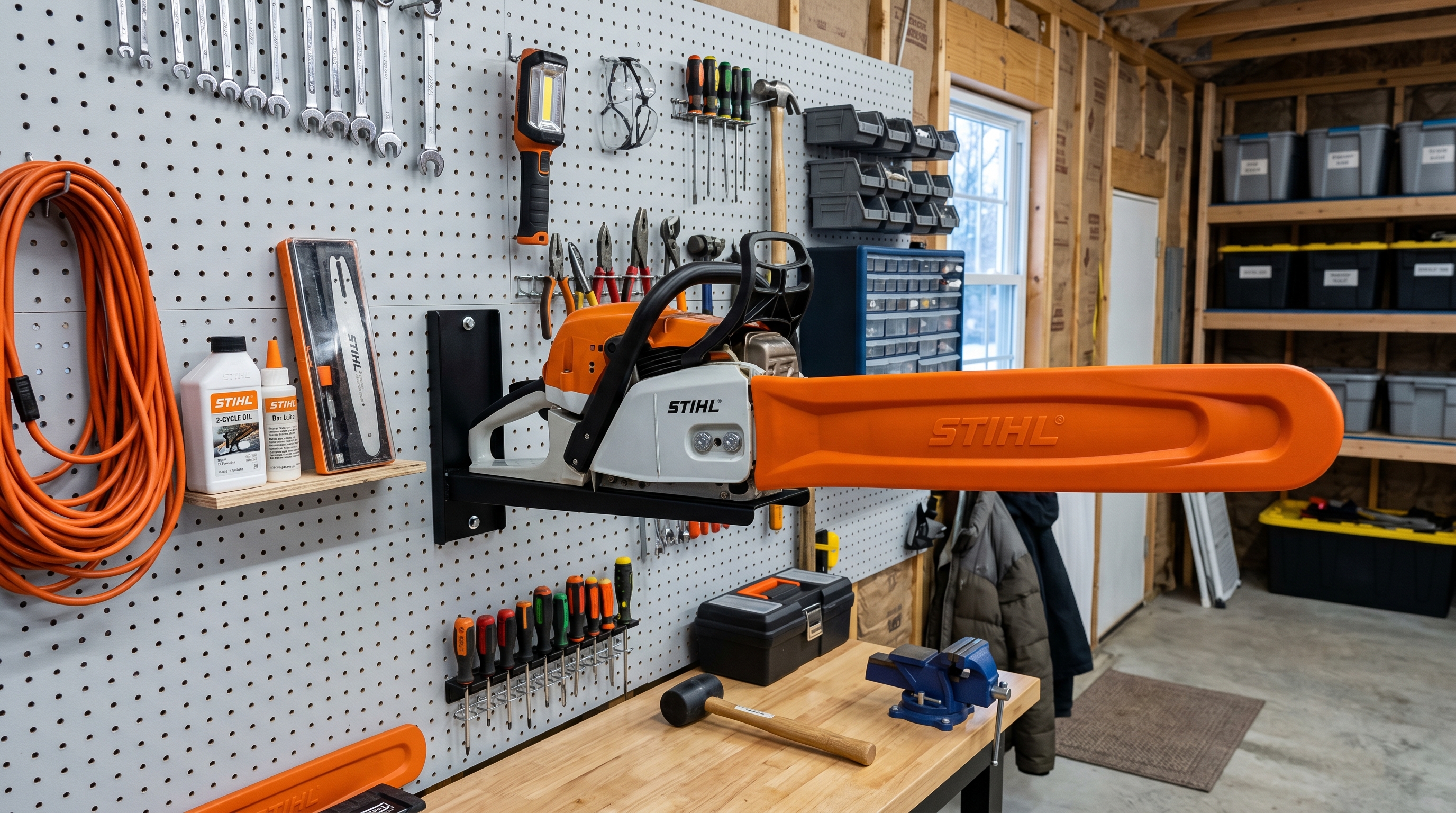
The last cut of the season is usually late fall — storm cleanup, a final load of firewood, or one more pass at brush before winter. After that, the saw sits for three to five months. What you do in the ten minutes before shelving it determines whether it starts cleanly in spring or greets you with a seized bar, a rusted chain, and a clogged oil system.
Release chain tension before storage
This is the most commonly skipped step and causes the most preventable damage.
A tensioned chain exerts continuous inward pressure on the bar rails. Over months, that sustained pressure compresses the rails unevenly, especially if the bar is stored where gravity loads one side. The groove becomes tighter in spots, causing the chain to bind or run stiff when you use it again.
To release tension:
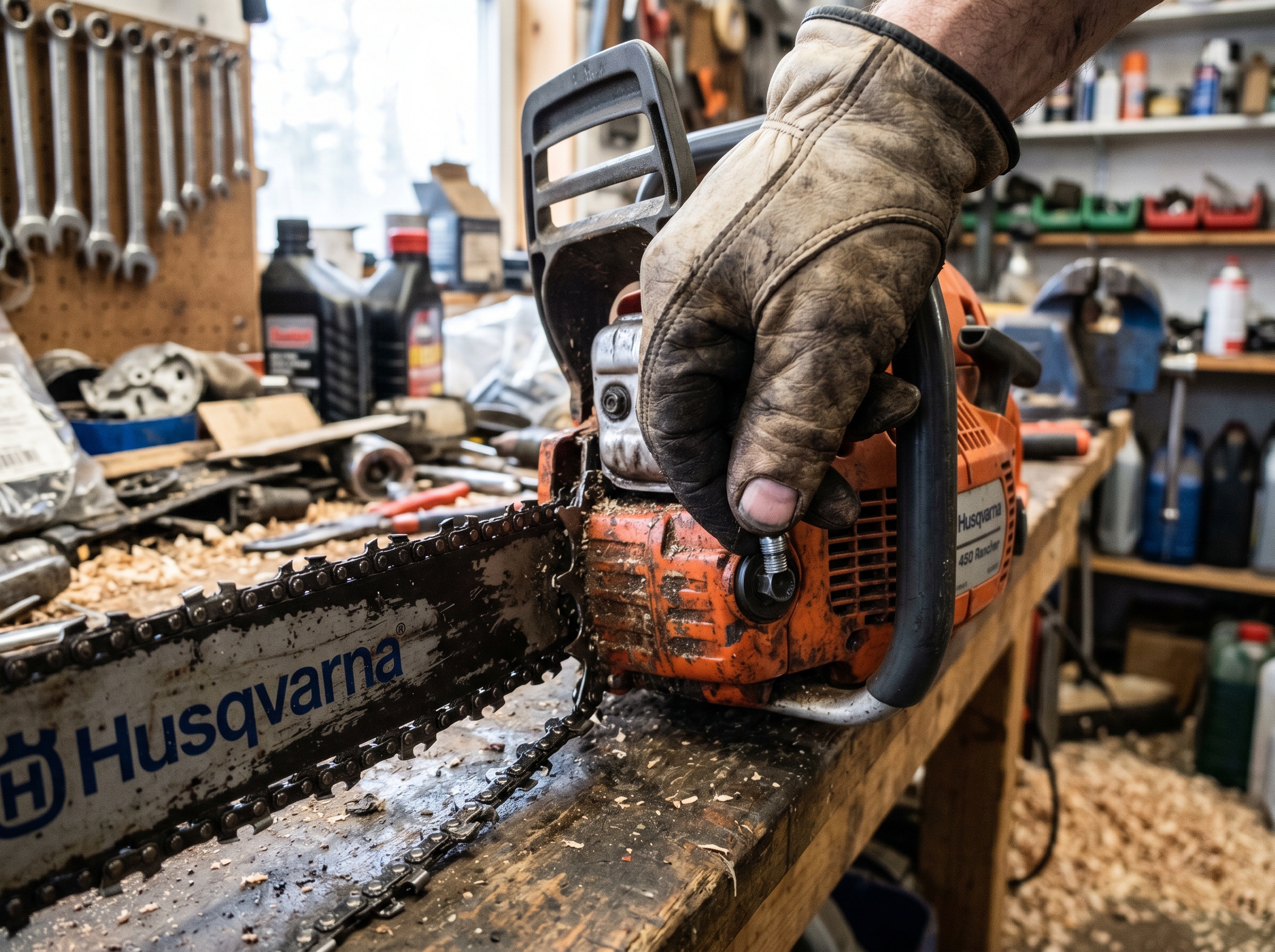
- Loosen the bar nuts or toolless tensioner.
- Back off the tensioning screw until the chain hangs visibly slack — drive links should droop below the rail.
- Leave the bar nuts finger-tight to keep the bar attached but not clamped.
You can also remove the bar and chain entirely. Store the bar flat (not leaning, which can introduce a bend) and hang the chain so it does not kink.
Why storing under tension damages the bar
A chainsaw bar is two thin rail plates welded together with a hollow center. The groove between them is machined to match the chain gauge exactly. When tensioned, the chain squeezes the rails inward. During cutting, this tension is dynamic. During storage, it is static — constant inward pressure at the same points for months.
Season after season of tensioned storage compounds the deformation. The groove narrows, the chain binds, and the bar runs hot and wears chains prematurely. If your chain stretches faster than expected, stored tension may be a factor — our article on why chainsaw chains keep stretching covers other common causes.
Clean and oil the bar
Before storage, clean thoroughly:
- Scrape the bar groove with a groove-cleaning tool or thin screwdriver. Packed sawdust hardens over time and obstructs oil flow at spring startup.
- Clean the oil inlet hole near the bar mount. A clogged inlet means no oil reaches the chain even if the pump works. Our guide on chainsaw bar oil not flowing covers diagnosis.
- Wipe the bar rails and apply a light coat of bar oil or rust-preventive spray. This prevents surface rust during months of garage humidity.
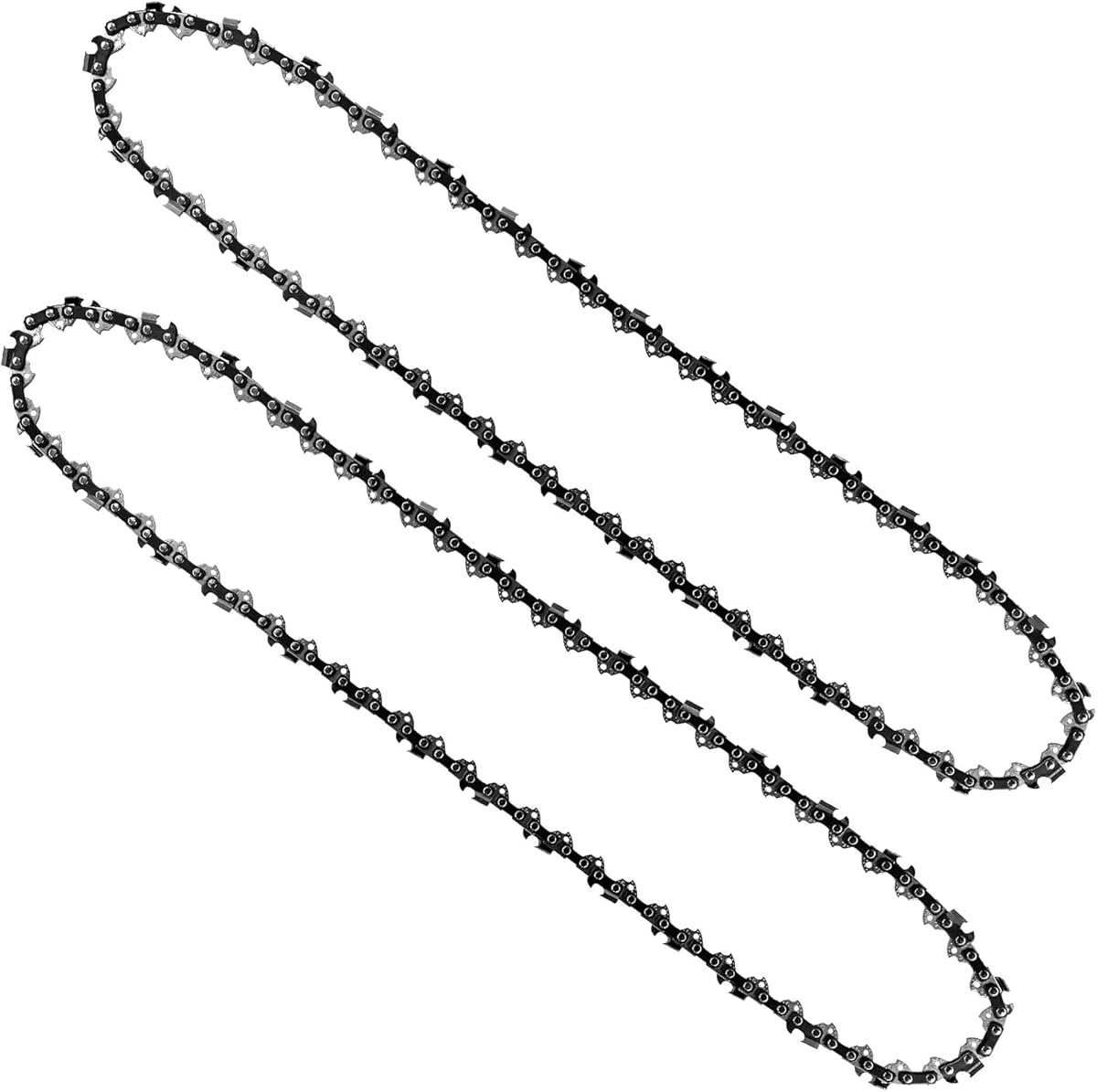
If storing the chain separately, wipe it down and soak briefly in bar oil, then hang it or seal it in a bag. A dry chain rusts quickly, and rust on drive links accelerates groove wear when reinstalled.
Handle the fuel system (gas saws)
Option 1 — Run the tank dry. Run the saw until it stalls, then pull the starter a few more times to clear the carburetor. Simple and effective for storage under six months.
Option 2 — Fill with stabilized fuel. Add stabilizer to a full tank, run for two to three minutes to circulate treated fuel through the carb, then shut down. Better for longer storage or easier spring startup.
Never leave a half-tank of untreated fuel over winter. Ethanol-blended gas absorbs moisture and degrades within 30-60 days, leaving varnish in the carb and gummed fuel lines.
Also top off the bar oil reservoir. A partially filled tank allows condensation that degrades oil quality.
Handle the battery (battery saws)
- Remove the battery. A battery left in the tool drains slowly even when off.
- Store at 40-60% charge. Fully charged lithium-ion cells degrade faster in storage.
- Keep indoors at room temperature. Unheated garages and hot attics accelerate cell degradation.
- Check charge every 6-8 weeks. Top up to 40-50% if it has dropped significantly.
Spring startup checklist
When the saw comes back out:
- Inspect the bar — rails, groove depth, nose sprocket.
- Install and tension the chain with cutters facing the correct direction. Snug, not tight.
- Check oil flow — fill the reservoir, start the saw, rev briefly over cardboard. You should see a fine line of oil flung off the chain tip.
- Gas saws: Fill with fresh fuel. Inspect fuel filter and lines for cracking.
- Battery saws: Fully charge before first use.
- Make a test cut — check for straight tracking, smooth chain movement, and consistent oil delivery.
Releasing tension, oiling the bar, and handling the fuel or battery correctly takes fifteen minutes. That is the cheapest maintenance you can do, and it prevents problems that cost far more in parts and downtime come spring.

Find the right part on Amazon
Check price, stock and fitment — ships direct from Amazon.
§ Parts