§ How-To
Chainsaw Bar Oil Not Flowing? Causes and Fixes
Diagnose why your chainsaw bar oil isn't reaching the chain — from blocked oil ports and pump failures to wrong oil viscosity and cold-weather problems.
Published · Last updated:
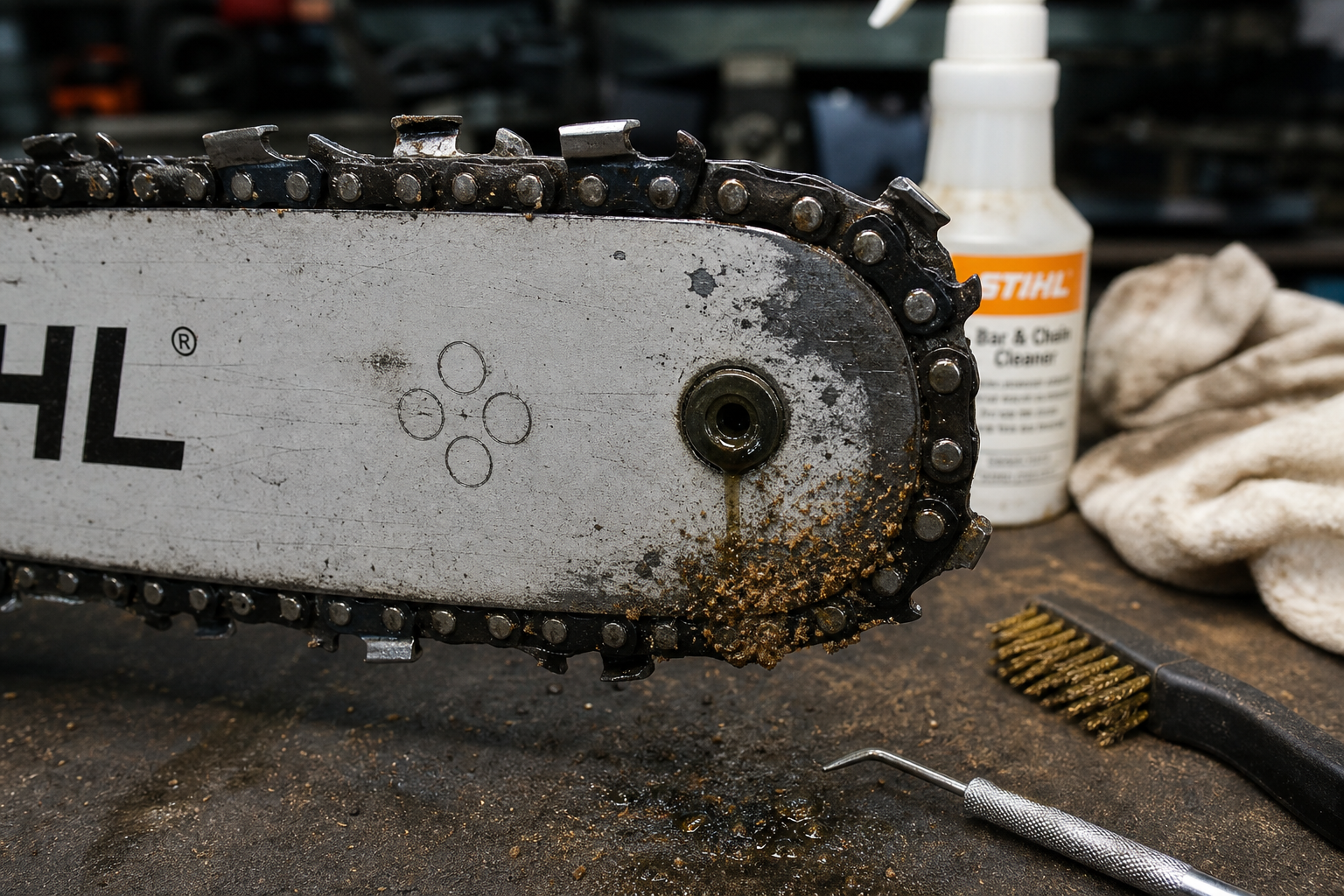
A chainsaw chain running without oil is heading for trouble fast. You’ll hear it first — a higher-pitched whine and the smell of hot metal — and then you’ll see it: smoke coming from the bar, blued steel on the rails, and a chain that dulls in minutes instead of hours. Bar oil lubricates the chain, reduces friction against the guide bar, and carries away heat and fine debris. When it stops flowing, damage to the chain, bar, and even the drive sprocket can happen within a single cutting session.
If you’ve noticed your chainsaw bar oil isn’t reaching the chain, here’s a systematic way to find the cause and sort it out before you ruin good parts.
Check the Basics First
Before pulling anything apart, rule out the obvious:
- Oil reservoir is empty. It sounds too simple, but many homeowner saws burn through bar oil faster than fuel. Top it up and test again.
- Oil cap vent is blocked. If the cap doesn’t vent, a vacuum builds inside the tank and the pump can’t draw oil. Clean the cap and check for a small vent hole or slot.
- Wrong oil in the tank. Bar and chain oil is formulated to be tacky — it clings to the chain at speed. Vegetable oil, motor oil, or old cooking oil don’t have the right viscosity or cling. Use proper bar and chain oil.
To test whether oil is flowing, hold the running saw with the bar tip a few centimetres above a piece of light-coloured cardboard or a stump face. Rev the engine or motor for 20–30 seconds at moderate speed. You should see a fine line or spray of oil. No oil line means the problem is upstream of the bar.
Blocked Oil Port on the Bar
This is the single most common cause of bar oil not reaching the chain, especially on saws that have been stored for a while or used in dusty, sappy conditions.
Every guide bar has at least one oil inlet hole — a small port near the mounting slot where oil enters from the saw body. On many bars, there are two holes (one on each side) so the bar can be flipped for even wear.
To clean the oil port:
- Remove the bar from the saw.
- Locate the oil inlet hole(s) near the bar mount end.
- Use a small wire, a straightened paperclip, or a dedicated bar-groove cleaning tool to clear the port.
- Clean out the bar groove as well — packed sawdust and sap act like a dam.
- Blow compressed air through the groove and oil holes if available.
While you’re at it, check the oil outlet on the saw body. That’s the small hole or channel where oil exits the powerhead. If it’s clogged with sawdust and oil residue, no amount of pump pressure will push oil through.
Clogged Bar Groove
The groove that runs around the perimeter of the bar carries the drive links and distributes oil along the chain path. When this groove fills with compacted sawdust, the oil has nowhere to go.
Clean the groove with a bar-groove cleaning tool or a flat-blade screwdriver. Run it around the full length of the groove on both sides. You’ll often be surprised how much packed debris comes out, especially near the bar nose.
This is good maintenance to do every time you change or sharpen the chain. A clean groove improves both oiling and chain life.
Oil Pump Failure
If the oil ports and groove are clear, the reservoir is full, and you’re still not seeing oil, the problem is likely the oil pump itself.
Most chainsaws use an automatic oil pump driven by the engine or motor via a worm gear. On some models, the pump is adjustable — look for a small flathead screw on the underside of the saw near the bar mounting area.
Common pump issues include:
- Worm gear stripped or disconnected — The small plastic or metal gear that connects the crankshaft or motor to the oil pump can wear out or break. This is especially common on saws that have run dry or been stored with old oil gumming up the works.
- Pump diaphragm or plunger stuck — Old, thickened oil can seize the pump internals. Flushing with fresh oil sometimes frees it. In stubborn cases, the pump needs to be removed and cleaned or replaced.
- Oil line cracked or disconnected — The flexible tube running from the tank to the pump can crack with age or vibration. Check for wet spots or oil weeping around the pump area.
On battery chainsaws, the oil pump is typically electric and simpler, but can still fail if the motor connection corrodes or the pump filter screens clog.
If the pump is adjustable, try turning the screw to increase flow before assuming it’s failed. Some owners accidentally knock this screw to the minimum setting without realising it.
Cold Weather and Oil Viscosity
In colder months — common enough through much of the UK autumn and winter — bar oil thickens and flows more slowly. Standard bar and chain oil is designed to work across a reasonable temperature range, but in near-freezing conditions it can become sluggish.
Symptoms of cold-weather oil problems:
- Oil flows fine once the saw warms up but is absent in the first few cuts
- The oil reservoir empties much more slowly than normal
- Oil appears thick or gel-like when you open the cap
Solutions:
- Use a winter-grade bar oil if one is available for your brand. These are thinner and flow better in cold conditions.
- Store the saw indoors before use so the oil starts at a workable temperature.
- Never thin bar oil with diesel or paraffin — this is an old trick that reduces the oil’s ability to cling to the chain and can damage seals.
Bar Nose Sprocket Dry or Seized
Many longer guide bars have a roller-tip (sprocket nose) that needs periodic greasing through a small grease port on the bar tip. If this sprocket seizes, it creates enormous friction at the nose, which can look and feel like an oiling problem even when oil is reaching the rest of the chain.
Check by spinning the sprocket by hand with the chain removed. It should turn freely. If it’s stiff or locked, apply bar-tip grease through the grease hole using a needle-nose grease gun. If the sprocket is completely seized, the bar needs replacing.
What to Look for in a Replacement
If your bar is worn out — pinched groove, damaged oil ports, or a seized nose sprocket — replacement bars and bar-and-chain combos matched to your saw’s specifications will restore proper oil flow and chain performance. When shopping for a replacement bar, make sure the oil inlet holes align with your saw’s oil outlet, and that the bar mount pattern, pitch, gauge, and length all match. A correctly fitted bar is the foundation of reliable oiling.

Find the right part on Amazon
Check price, stock and fitment — ships direct from Amazon.
§ Parts