§ Journal · Jun 2, 2026
Property Line Clearing — Bar and Chain Setup for Mixed Brush and Small Trees
The right bar length, chain type, and saw platform for clearing overgrown property boundaries with mixed brush, saplings, and vines.
Published · Last updated:
Property Line Clearing — Bar and Chain Setup for Mixed Brush and Small Trees
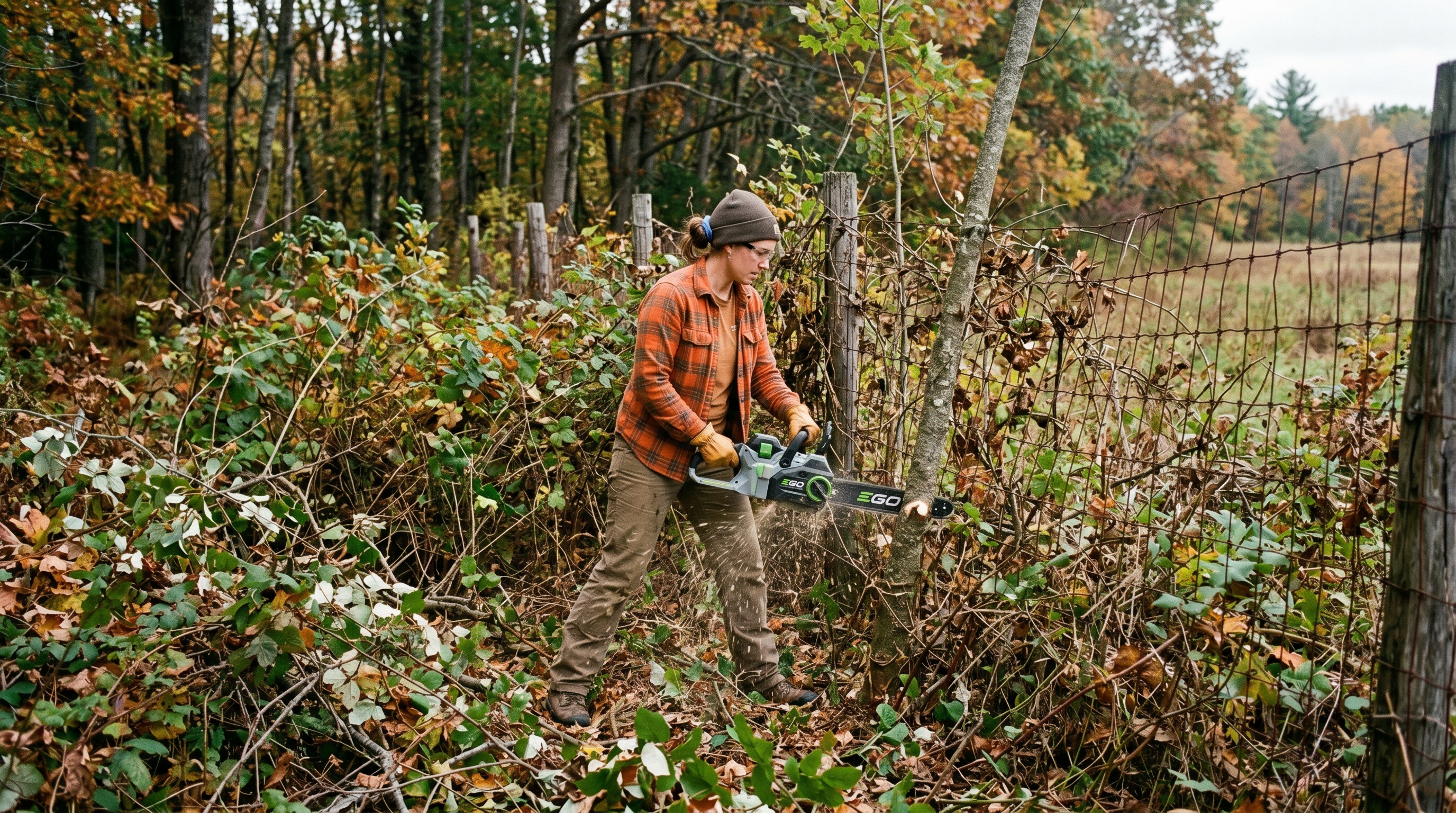
Clearing an overgrown property line looks simple until you are standing in the middle of it. What starts as “a few saplings and some brush” turns into a tangled mix of 3-inch hardwood stems, wild grape vines, thorny undergrowth, and the occasional 8-inch tree that has been growing unchecked for years.
This is different from bucking firewood or felling timber. The cutting is intermittent, the material is varied and often dirty, and you spend as much time repositioning as cutting. Your bar and chain setup should reflect that.
Why shorter bars win for boundary clearing
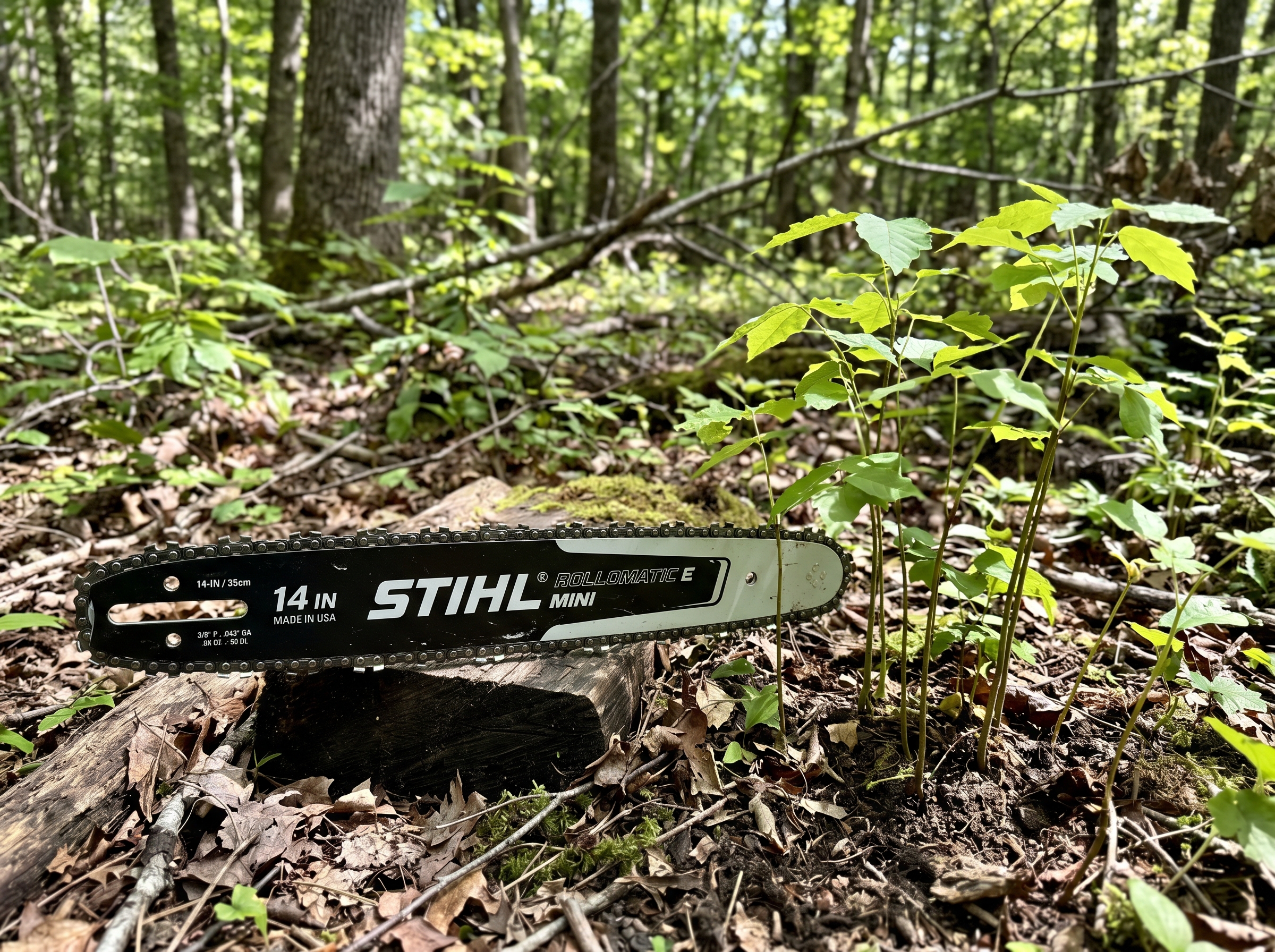
A 14- to 16-inch bar is almost always the better choice over an 18- or 20-inch bar for this work.
Maneuverability matters more than reach. You are working in tight spaces between standing trees, leaning into brush piles, cutting at odd angles. A shorter bar is lighter at the tip and far less likely to get pinched in a cluster of saplings.
You are rarely making deep cuts. Most material — saplings, brush stems, vines — is under 6 inches in diameter. A 14-inch bar handles that easily. The extra length of a 20-inch bar adds weight for no practical gain.
Kickback risk increases in brush. The bar tip frequently contacts wood at unexpected angles near the ground. A shorter bar has a smaller kickback zone at the nose, reducing the severity of any kickback event.
If you encounter a tree over 10 inches, bore-cut it with the 14-inch bar or switch to a larger saw for that one tree. Do not size your clearing saw for the exception.
Semi-chisel chain for dirty conditions
Property boundaries neglected for years are dirty. Wood has been rubbing against the ground. Vines pull dirt into the bark. Saplings at the edge of mowed areas have soil splashed onto the lower trunk.
This is where semi-chisel chain outperforms full chisel:
- Rounded working corners hold their edge longer in dirty, gritty wood. Full chisel’s sharp square corner dulls almost immediately on contact with dirt or sand.
- More consistent cutting as they dull. A slightly dull semi-chisel chain still makes reasonable cuts. A slightly dull full chisel chain tears and grabs.
- Less frequent sharpening. Full chisel might need attention every 15-20 minutes on dirty material. Semi-chisel can go two or three times as long.
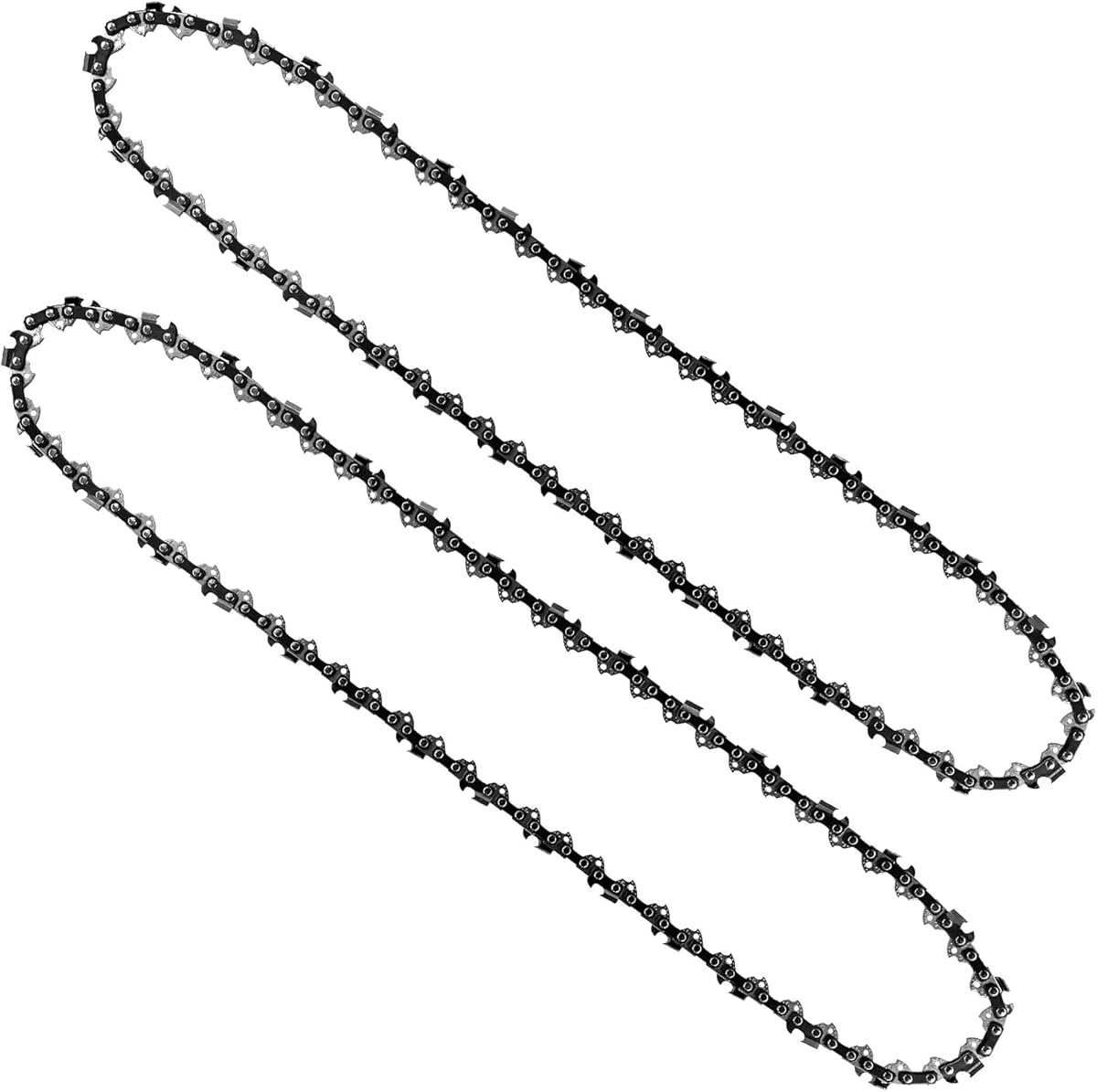
For most property line clearing, a standard semi-chisel, low-kickback chain in 3/8” low profile pitch is the right call. If you need help matching a chain to your specific saw, our guide on how to match a replacement chain covers the process step by step.
Battery saws make sense for this job
Property line clearing is stop-and-go work. You cut a sapling, drag it aside, reposition, cut the next one. A gas saw idles between cuts, burning fuel and generating noise. A battery saw draws zero power when not cutting.
- No idling fuel consumption. Over a full day of intermittent clearing, idle fuel burn adds up fast.
- Instant start and stop. Pull the trigger and it cuts. Release and it stops. No choking or pull-starting after setting the saw down to move brush.
- Lower fatigue. Reduced noise and vibration matters over a full afternoon of clearing work.
- No exhaust in tight spaces. Property lines along fences and hedgerows have poor air circulation.
Modern 56V and 80V battery chainsaws with 14- or 16-inch bars have more than enough power for saplings and brush. Carry two batteries and clear for hours. For chain considerations between platforms, see our battery vs petrol chainsaw chains guide.
Bring a second chain
Clearing work is hard on chains. Vines wrap around the bar and pull sideways. Hidden nails, fence wire, and old stakes are common along property lines. Dirt contact is unavoidable.
Carry a spare chain. When the first dulls, swap it on in the field and sharpen the dull one at the workbench later. A two-chain rotation also extends the life of both chains.
Gear checklist
- Saw: 14-16” bar, battery or light gas (under 40cc)
- Chain: Semi-chisel, low-kickback, matched to your bar specs
- Spare chain: Same spec, pre-sharpened
- Bar oil: Top off before starting
- Hand tools: Loppers for anything under 1.5 inches, pruning saw for awkward angles
- PPE: Chaps, gloves, eye protection, hearing protection, boots
A shorter bar, a semi-chisel chain for dirty conditions, and a battery saw for intermittent cutting will get you through property line clearing faster and with less wear on your equipment and yourself.

Find the right part on Amazon
Check price, stock and fitment — ships direct from Amazon.
§ Parts