§ How-To
Electric vs Petrol Chainsaw Chains — Are They Different?
Do electric and petrol chainsaws need different chains? Learn why chain specs matter more than power source and clear up common misconceptions.
Published · Last updated:
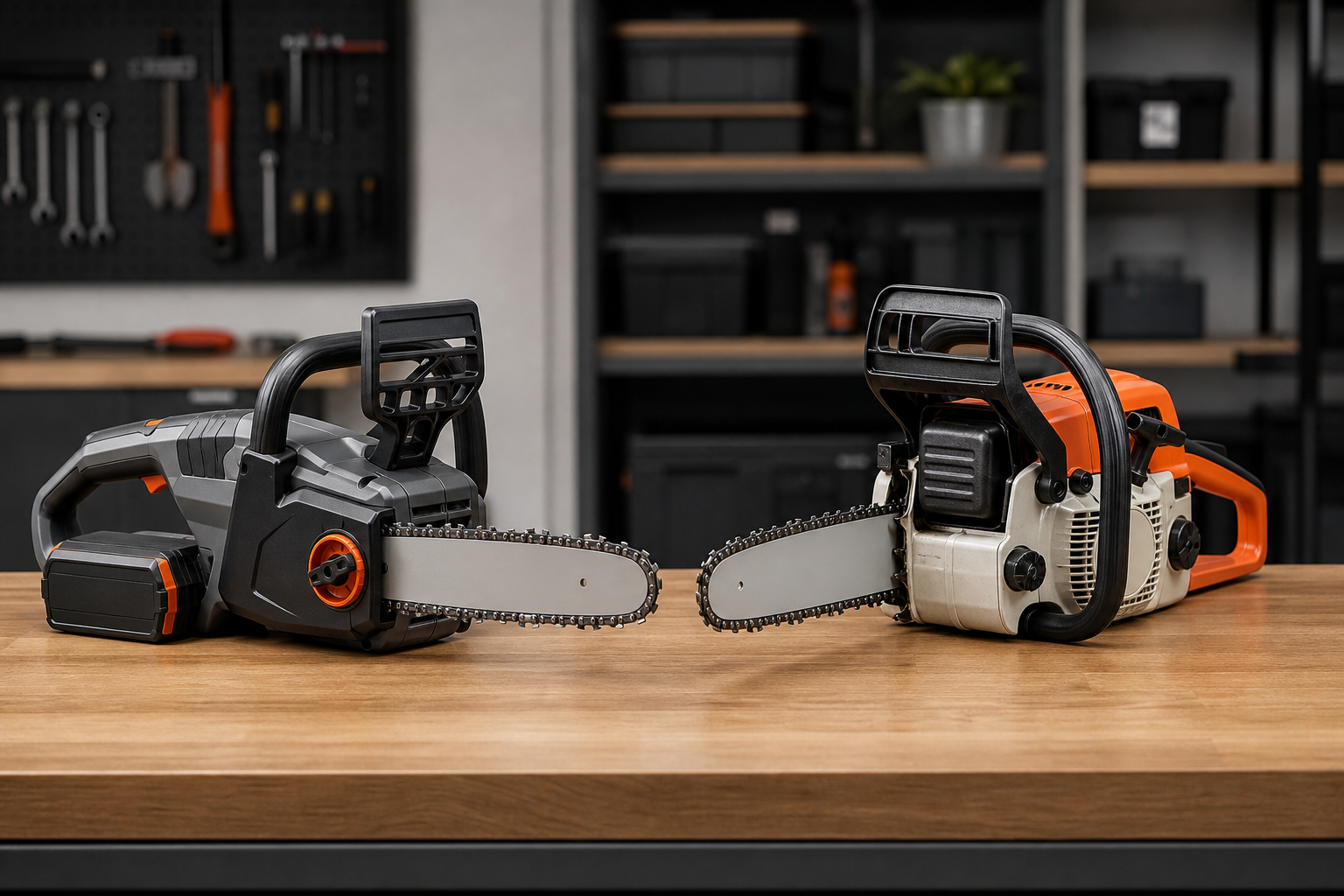
This question comes up constantly in owner forums and DIY groups: “Can I use the same chain on my electric chainsaw as on my petrol one?” The short answer is that chains are not inherently “electric” or “petrol.” A chainsaw chain doesn’t know or care what’s powering the saw. What matters is whether the chain matches the guide bar’s specifications — pitch, gauge, and drive-link count. If those three numbers match, the chain will fit and work correctly regardless of whether the saw runs on a battery, mains electricity, or a two-stroke engine.
That said, there are practical differences in how electric and petrol saws are typically set up, and those differences affect which chains you’ll commonly see on each type. Understanding this will help you avoid ordering the wrong chain and clear up some persistent myths.
The Chain Doesn’t Know the Power Source
A chainsaw chain is a mechanical loop. It rides in the guide bar groove, engages with the drive sprocket, and cuts wood with its sharpened teeth. The chain’s job is the same whether it’s being spun by a brushless motor or a petrol engine.
What determines the correct chain is the guide bar, not the motor. The bar dictates:
- Pitch — the spacing of the chain’s rivets, which must match the bar’s sprocket
- Gauge — the thickness of the drive links, which must match the bar groove width
- Drive-link count — the number of drive links needed to form the correct loop length for that bar
If you put the same guide bar on an electric saw and a petrol saw (assuming both accept that bar), both saws would use the exact same chain.
Why Electric and Petrol Saws Often Use Different Chains
Even though the chain itself is power-source-agnostic, electric and petrol chainsaws are typically built with different bars and sprockets. That’s where the practical differences come in.
Smaller bars on electric saws
Most corded and battery chainsaws sold for home use carry 10” to 16” bars. Petrol saws commonly start at 14” and go up to 20” or beyond for homeowner models. Shorter bars generally use fewer drive links, and some use narrower gauge chains.
Low-profile chains are more common on electric saws
Many electric chainsaws — especially battery models — come fitted with 3/8” Low Profile chains in 0.043” (1.1 mm) gauge. These are lighter, thinner chains that require less power to drive and are well suited to the lower torque output of electric motors.
Petrol saws more commonly use 0.050” (1.3 mm) or 0.058” (1.5 mm) gauge chains, often in 3/8” Low Profile or 0.325” pitch, depending on the saw class.
Narrower kerf chains save battery life
Some manufacturers fit electric saws with narrow-kerf chains. These chains remove less wood per pass, which means less resistance and longer run time per battery charge. The trade-off is a slightly narrower cut, which is rarely an issue for typical homeowner tasks like limbing, pruning, and cutting firewood.
Common Misconceptions
”Electric chainsaw chains are weaker”
Not true. The chain material and construction are the same. A 3/8” LP, 0.050” gauge chain made for a petrol saw is identical to one made for an electric saw if the specs match. The confusion arises because electric saws tend to use lighter chains (thinner gauge, low-profile pitch), which are designed for lighter cutting — not because they’re lesser quality.
”You can’t put a petrol chain on a battery saw”
You can, as long as the pitch, gauge, and drive-link count match the bar. However, if your battery saw came with a 0.043” gauge bar and you try to fit a 0.050” gauge chain, it won’t fit in the groove. That’s not an electric-vs-petrol issue — it’s a gauge mismatch.
”Electric saws need special low-kickback chains”
Low-kickback chain features (like guard links or ramped depth gauges) are about safety design, not power source. Many petrol saws sold for consumer use also come with reduced-kickback chains. Professional petrol saws often use full-chisel or skip-tooth chains because the operators are trained and equipped for them. The kickback rating is a chain characteristic, not a power-source requirement.
”Chains from my old petrol saw will work on my new battery saw if the bar is the same length”
Bar length alone is never enough. Two 14” bars can require different pitch, gauge, and drive-link counts. Always check all three specifications before swapping chains between saws, regardless of power source.
How to Choose the Right Chain for Either Type
The process is exactly the same for electric and petrol saws:
- Check your guide bar for stamped specifications — pitch, gauge, and ideally drive-link count
- Count the drive links on your current chain if the bar stamp is incomplete
- Confirm pitch — make sure you distinguish between 3/8” Low Profile and 3/8” full
- Confirm gauge — measure or cross-reference with the bar model number
- Match all three when selecting a replacement chain
If you’re replacing both the bar and chain together, a matched bar-and-chain combo ensures compatibility out of the box. This is especially useful when switching bar lengths or when the original bar is worn out and the specs are no longer legible.
What to Look for in a Replacement
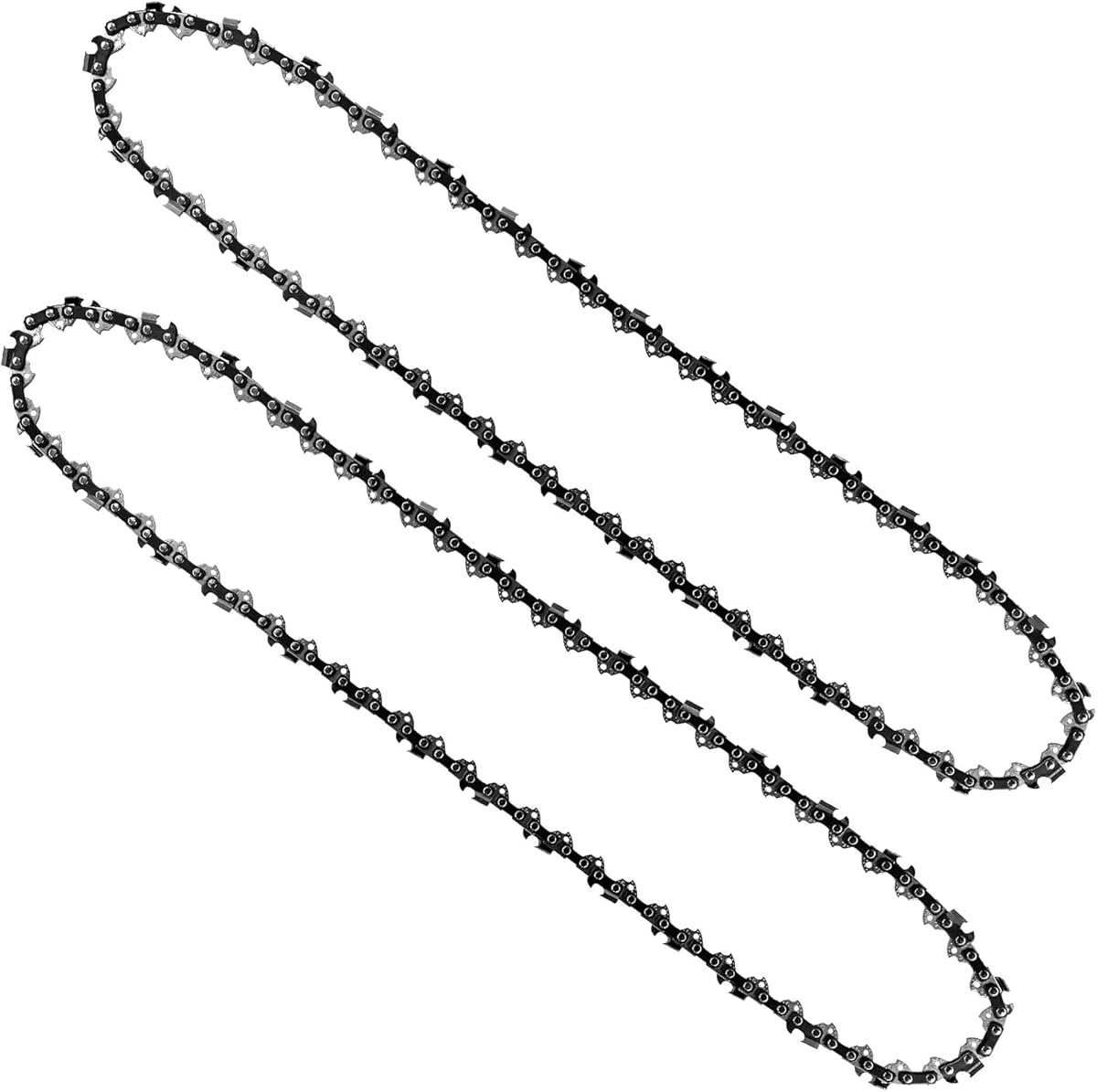
Whether your saw is electric or petrol, the key is an exact-fit replacement chain that matches your bar’s pitch, gauge, and drive-link count. Replacement chains and bar-and-chain combos are available for all common electric and petrol saw configurations. Focus on the numbers, not the power source, and you’ll get the right chain every time.

Find the right part on Amazon
Check price, stock and fitment — ships direct from Amazon.
§ Parts